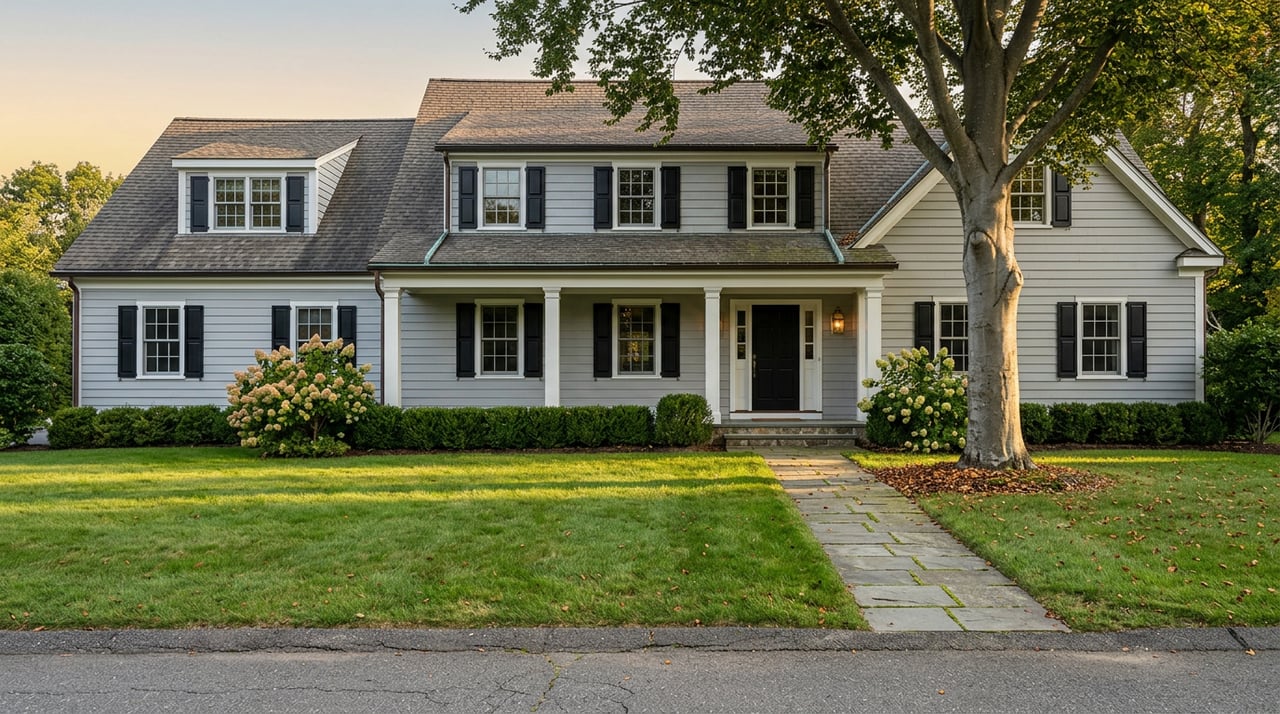
Wellesley Home Renovation Energy Code: What Really Applies
September 24, 2026
September 24, 2026
The Town of Wellesley answers the most common renovation question in nine words: "No, the Opt-in Code applies only to new construction." That line comes straight from the town's own 2023 Town Meeting FAQ on energy codes, and it contradicts what a lot of homeowners have already convinced themselves is true before they call a contractor.
Here is the version of the story that circulates at dinner parties and in renovation-forum threads: Massachusetts has a strict "net zero" energy code, Wellesley has adopted it, and if your project crosses some size threshold, you're suddenly required to build a solar-powered, zero-emissions house whether you wanted one or not. Parts of that story are true. The part that trips people up is which projects it actually touches.
If you're planning a kitchen gut, a second-floor addition, or a full renovation on a Wellesley property you're about to list or just bought, the code that governs your permit is not the one you've heard the scary stories about. It's a quieter, older rule that still has teeth, and the more consequential financial consideration in 2026 isn't the building code at all. It's the rebate math.
Massachusetts runs three tiers of energy code. The Base Code is the statewide floor. The Stretch Code is a tougher, opt-in layer that Wellesley adopted back in 2011. The Specialized Opt-in Code is the newest and strictest tier, built to push new construction toward true net-zero performance, and, as the Home Builders & Remodelers Association of Massachusetts reports, Wellesley adopted that one effective January 1, 2024, the same date as Newton. Belmont followed a year later, on January 1, 2025. Needham landed in between, adopting it effective July 1, 2024.
The Specialized Code is where the 4,000-square-foot number people worry about actually lives. It sets one set of requirements for new mixed-fuel homes at or under 4,000 square feet of conditioned floor area, and a stricter set, including a path toward zero net energy, for anything larger. That threshold is real, and it's genuinely tight for a town like Wellesley where a comfortable single-family home can clear 4,000 square feet without anyone thinking of it as a mansion.
But read the town's own FAQ again. The Specialized Code applies to new construction. Additions and renovations, regardless of how ambitious, stay under the Stretch Code and Base Code. The 4,000-square-foot cliff that people apply to their gut renovation is a rule written for someone building a house from a hole in the ground, not someone gutting one they already own.
| Code Tier | Wellesley Adoption | What It Actually Governs |
|---|---|---|
| Base Code | Statewide minimum | Any project not otherwise covered |
| Stretch Code | 2011 | Renovations, additions, most existing-building work |
| Specialized Opt-in Code | January 1, 2024 | New construction only |
None of this means a Wellesley renovation is a free pass on energy compliance. The Stretch Code still applies, and it has gotten tighter over the past two years. Under the version the town adopted, the HERS Index target, a lower score meaning better efficiency, ran at 55 for all-electric homes and 52 for mixed-fuel homes from January 1, 2023 through June 30, 2024. Since July 1, 2024, that target has dropped to 45 for all-electric and 42 for mixed-fuel, a meaningfully harder number to hit.
For most renovation and addition permits, that means a ResCheck compliance document. The town's own building permit checklist requires this documentation for additions, renovations, and repairs, not just new homes, so "I'm not building new" doesn't mean "I skip the energy paperwork." It means you're working from a different, somewhat less demanding rulebook than the one your neighbor building a new house next door is working from.
If you're timing a renovation permit around a home sale, the town's building department notes that new construction reviews generally take 10 to 14 days, with other project types often moving faster. Confirming which code tier and which review track your specific project falls under, before you sign a contract, is exactly the kind of five-minute phone call the town's own permit guide recommends.
The main cost difference here has nothing to do with the building code. Wellesley runs its own electric utility, the Wellesley Municipal Light Plant, and, as MassHVAC explains, WMLP customers don't participate in Mass Save, the statewide rebate program most Massachusetts homeowners assume applies to everyone. Belmont, which also runs its own light plant, shares this same structural quirk. If you've priced a renovation using rebate numbers you saw for a friend in Newton or Needham those numbers simply don't apply to you.
WMLP runs its own program instead, administered through Abode Energy Management, with its own numbers and its own calendar. For 2026, the whole-home heat pump rebate pays $8,500 if you remove or decommission your existing heating system, or $6,500 if you keep it as backup. Partial-home installs pay $1,125 per ton up to $5,000, and a new Basic tier pays $500 per ton up to $2,500 for customers who don't qualify for the higher categories.
One important limitation appears in the fine print of WMLP's separate ENERGY STAR appliance rebate: new construction and major or gut renovations are ineligible when the equipment being installed is required to meet current building code. In practice, that means if your renovation is large enough to trigger a Stretch Code requirement for a particular system, the rebate meant to reward you for choosing efficient equipment voluntarily doesn't apply to equipment you were required to install anyway.
There's also a separate timing consideration. Beginning January 1, 2026, a federal EPA rule barred the installation of new HVAC systems using refrigerants with a Global Warming Potential above 700, which knocked R-410A equipment off WMLP's qualified list. Anyone who got a heat pump quote in 2025 using older equipment and let the installation slide past that date lost rebate eligibility on that unit entirely. That date has already passed as of this writing, but it's worth understanding if you're evaluating a renovation someone else started, or comparing quotes that reference older pricing.
A short list worth working through with your contractor and the town before committing to a scope of work:
For a family preparing to list a Wellesley home after a kitchen or primary suite renovation, knowing which code actually governed the permit process means you can speak to it accurately in disclosures and marketing materials rather than repeating a version of the rule that isn't quite right. For someone buying in Wellesley with a renovation already planned, the WMLP rebate structure changes the real cost of that project in a way a median list price never will.
This is the kind of detail that separates a generic renovation estimate from one built around how Wellesley actually works. The Barry-Beaver Team spends time in these permitting and utility details because they shape timelines and budgets on the homes we help clients buy, sell, and prepare for market across Newton and MetroWest.
If you're weighing a renovation before listing, or evaluating what a fixer in Wellesley will really cost to bring up to your standard, the Barry-Beaver Team offers a complimentary home valuation and can walk through what a project like this actually means for your timeline and your bottom line.
Does a kitchen or bathroom remodel trigger any of this? Purely cosmetic work generally stays under the Base Code. Once a project touches the thermal envelope or requires new mechanical systems, the town's building department determines whether Stretch Code documentation applies, so it's worth asking before you finalize scope.
If I buy in Wellesley planning a large addition, does the Specialized Code apply to that addition? No. The Specialized Opt-in Code, per the town's own FAQ, applies to new construction only. Additions and renovations are governed by the Stretch Code and Base Code, regardless of size.
Is the Wellesley rule different from what my friend in Newton dealt with? The code tiers and adoption dates are close, since Newton adopted the Specialized Code the same day Wellesley did. The real difference is the utility. Wellesley runs its own municipal light plant with its own separate rebate program, which is why the numbers and deadlines don't match.
This article is general information, not legal, tax or financial advice. Consult a qualified professional about your situation.
Stay up to date on the latest real estate trends.
Barry-Beaver Team is dedicated to helping you find your dream home and assisting with any selling needs you may have. Contact us today to start your home-searching journey!