Relocating to Boston Suburbs: Compare 4 Western Towns
July 9, 2026
July 9, 2026
Thinking about a move west of Boston, but not sure which suburb actually fits your daily life? That is a common challenge, especially when Newton, Wellesley, Needham, and Belmont can all look appealing at first glance. The good news is that each town has a distinct feel, housing mix, and commute pattern. This guide will help you compare them in a practical way so you can focus your search with more confidence. Let’s dive in.
It helps to start with one big idea: these towns are not interchangeable. While all four connect to Greater Boston through rail, bus, and major road access, each one is organized differently and supports a different day-to-day rhythm.
Newton is built around 13 village centers rather than one downtown. Wellesley is shaped by traditional villages and shopping districts. Needham is actively reworking Needham Center, and Belmont has long been tied to residential growth around rail stops. If you are relocating, that structure matters because it affects how you shop, commute, and spend your weekends close to home.
Newton often appeals to buyers who want options within one community. Instead of a single central district, the city spreads commercial life across village centers, commercial corridors, malls, and office areas. That can make Newton feel decentralized, but it also gives you multiple places for dining, errands, and everyday routines.
Transit is one of Newton’s clearest strengths. The city has Green Line service through Riverside, with stops including Riverside, Woodland, Waban, Eliot, Newton Highlands, Newton Centre, and Chestnut Hill. It also has commuter rail service on the Worcester/Framingham line, with stops at Auburndale, West Newton, and Newtonville, plus several bus connections.
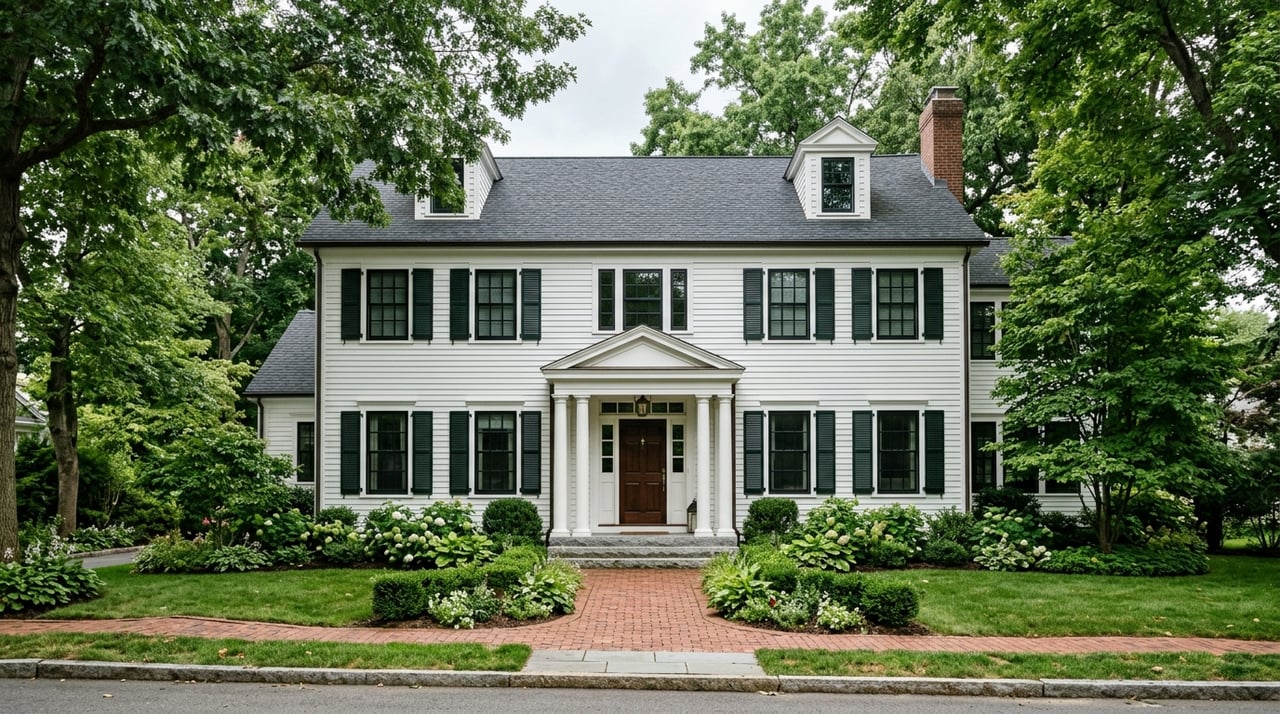
Housing in Newton reflects its long development history. The city’s architectural guide identifies styles ranging from Georgian and Federal to Greek Revival, Victorian types, Colonial Revival, Tudor Revival, and Bungalow or Craftsman. In practice, that means you may see a broad mix of home ages and styles from one village to the next.
In May 2026, Newton’s median sale price was about $1.66 million. That places it near Needham in this four-town group and below Wellesley in the latest snapshot.
Wellesley stands out for its traditional village structure and preservation-minded setting. The town centers its commercial life around Wellesley Square, Wellesley Hills, the Fells area, and Linden Square, along with smaller retail clusters. For many relocating buyers, that adds up to a strong sense of town identity without relying on one oversized business district.
Regional rail is a major part of the Wellesley lifestyle. The town has three stations on the Framingham-Worcester line, with parking in municipal lots. It also connects riders to Woodland and Waban on the Green Line through Catch Connect and MWRTA Route 1.
Wellesley’s housing stock often feels established and visually consistent. The town maintains multiple historic districts and neighborhood conservation districts, and preservation materials describe both Colonial Revival homes and vernacular Colonial-period houses. If you value an older, more cohesive streetscape, that may be an important factor in your search.
In May 2026, Wellesley’s median sale price was about $2.00 million, the highest of these four towns in the current snapshot. That does not define every listing, but it is a useful signpost as you build your budget and expectations.
Needham can be a strong fit if you want a suburban setting with a center that is actively growing into a more walkable destination. The town’s current vision for Needham Center focuses on creating a vibrant, sustainable, and resilient destination. Earlier planning materials also describe a long-standing mix of banks, coffee shops, hobby shops, restaurants, and evening activity.
For commuting, Needham blends train access with practical driving routes. The town has four MBTA commuter rail stops: Needham Heights, Needham Center, Needham Junction, and Hersey. It also connects to Route 95/128 via exits 33 and 35, and MBTA Bus Route 59 links Watertown Square and Needham by way of Newtonville.
Needham’s housing stock includes older Colonial and Colonial Revival fabric near historic areas, plus newer additions around commercial and business districts. Town historic-house materials note that center-entry Colonial forms were typical in an earlier era, which still shapes some of the town’s visual character today.
In May 2026, Needham’s median sale price was about $1.68 million. That places it very close to Newton in the current market snapshot, and the market was described as very competitive.
Belmont is the closest-in of the four towns, with the town stating that it is about 8 miles from Downtown Boston. For some buyers, that alone moves Belmont to the top of the list. If your priority is staying close to the city while still living in a distinctly suburban setting, Belmont is worth a close look.
Belmont is widely known by the town as the “Town of Homes,” and its development pattern has historically clustered around rail stops. Waverley Station sits on the Fitchburg commuter rail line, and commuter parking is available in Waverley Square and Belmont Center. That rail-based structure still shapes how the town feels and functions.
The town’s architecture covers several centuries and includes styles such as Greek Revival, Italianate, Second Empire, and Queen Anne. That older, character-rich housing fabric contributes to Belmont’s established feel. Belmont Center also serves as an important civic and social hub, with planning materials describing it as walkable and charming.
In May 2026, Belmont’s median sale price was about $1.41 million, the lowest of the four in this current snapshot. Even so, Belmont was described as the most competitive of the group, which is an important reminder that lower median price does not always mean easier buying conditions.
If you are relocating, the best question usually is not “Which suburb is best?” A better question is: Which daily rhythm fits your life? That answer often becomes clearer when you compare how each town is organized.
Here is a simple way to think about it:
That is not a ranking. It is a practical filter for narrowing your search based on how you actually want to live.
When you start comparing western suburbs, it helps to focus on a few basics before touring homes.
Do you want your week built around commuter rail, Green Line access, driving, or a mix? Newton offers the broadest transit mix of this group. Needham and Wellesley lean heavily on commuter rail, while Belmont offers close-in access with commuter rail connections.
Some buyers want one strong center. Others prefer multiple smaller hubs. Newton is the clearest example of a multi-center community, while Wellesley and Needham emphasize village and center-based patterns in different ways.
If architectural character matters to you, these towns offer different expressions of older suburban housing. Newton and Belmont show especially broad stylistic variety, while Wellesley often reads as more preservation-minded and cohesive. Needham combines older Colonial influences with later additions around commercial areas.
All four towns sit in the higher end of the Greater Boston market. The current median snapshot shows Belmont at about $1.41 million, Newton at $1.66 million, Needham at $1.68 million, and Wellesley at $2.00 million. That gives you a useful starting point, but individual home values can vary widely by location, size, condition, and property type.
A relocation search becomes more manageable when you decide what matters most before you dive too far into listings. Try ranking your priorities in this order:
Once you have that list, the differences between these towns become easier to evaluate. You stop comparing them in the abstract and start comparing them based on your real routine.
If you are planning a move to Greater Boston, a local, town-by-town strategy can save you time and help you make smarter decisions in a competitive market. The right fit is not just about price or proximity. It is about finding the suburb that supports how you want to live every day. If you want experienced guidance on Newton and the western suburbs, the Barry-Beaver Team can help you evaluate options with clarity and confidence.
Stay up to date on the latest real estate trends.
Barry-Beaver Team is dedicated to helping you find your dream home and assisting with any selling needs you may have. Contact us today to start your home-searching journey!